Storm Damage Cleanup

Serving all of East Grand Rapids · Open 24/7 · (616) 300-8900

When a severe storm rolls through Grand Rapids, it can leave behind a trail of destruction, from flooded basements to wind-damaged windows. Residents of neighborhoods such as Heritage Hill, Ada, and Wyoming know the unique challenges storms bring to their diverse housing styles. At United Water Restoration Group of East Grand Rapids, we're ready to respond swiftly and effectively. From the first call, you can trust our professional team to guide you through the cleanup process, beginning with a thorough assessment of the damage. Equipped with industry-leading tools, we aim to restore your home to its former state as quickly and efficiently as possible. Our expertise, coupled with local knowledge, ensures a comprehensive restoration plan tailored to the unique needs of Grand Rapids homes.

  • Local expertise in Grand Rapids storm damage.
  • 24/7 Emergency response team ready to assist.
  • Advanced moisture mapping techniques used.
  • Insurance claim assistance and guidance.
  • Certified technicians trained in IICRC standards.
  • Comprehensive storm damage solutions.

Understanding Storm Damage in Grand Rapids

In Grand Rapids, residents face an array of storm-related challenges depending on the season. During the harsh winters, the area is often plagued by lake-effect snow, which can lead to the formation of ice dams. These ice dams place significant stress on rooftops, causing water to seep into homes if not promptly managed. Our team frequently addresses water pipe breaks occurring in crawlspaces during January cold snaps, which can lead to extensive water damage if not mitigated quickly.

In spring, thawing ice and increased rainfall result in another major concern—sump pump failures. Nearly every Grand Rapids home features a basement, and when a sump pump fails, these spaces are left vulnerable to significant flooding. Severe summer storms, notorious for their high winds, pose their own risks. Shingles are ripped from roofs, paving the way for water infiltration, which can result in structural drying challenges over time. Coupled with the region’s humid summers, this sets a perfect stage for mold growth, wreaking further havoc on structural integrity and indoor air quality.

Homes in older Grand Rapids neighborhoods like Heritage Hill and Eastown face additional storm damage challenges. Aging infrastructure, including roofs and plumbing systems, often requires more attention during extreme weather events. Our team is adept at navigating these complexities, utilizing our understanding of local housing nuances to craft restoration solutions that respect the architectural integrity of historic homes while effectively addressing and mitigating storm-induced issues.

The Storm Damage Restoration Process

Storm damage restoration is a comprehensive process involving multiple stages, each critical to returning your property to pre-loss condition. Initially, we prioritize emergency mitigation by deploying powerful water extraction tools to address any standing water. This step prevents further problems, such as mold growth or structural drying needs, by minimizing moisture exposure.

Once we've controlled the immediate threats, we proceed with a detailed thermal imaging inspection and moisture mapping. These advanced techniques enable us to identify hidden moisture pockets that, if left untreated, could result in secondary issues like mold growth or structural compromise. Using moisture meters and low-grain refrigerant dehumidifiers, we meticulously track and control moisture levels, ensuring industry-standard dehumidification standards are met throughout the process.

To expedite the drying process, we document and deploy air movers strategically to promote water evaporation. Mold can develop within 24-48 hours of water intrusion, making it imperative to dry all salvageable materials promptly. We meticulously record daily drying logs, which are crucial for both clients and insurance adjusters. This meticulous documentation facilitates communication with insurance parties, clarifying the restoration efforts taken to bring the home back to standards described in the IICRC S500 guidelines.

Navigating Insurance Claims and Recovery

Facing the aftermath of a storm is an overwhelming experience, further compounded by the complexity of navigating insurance claims. At United Water Restoration Group of East Grand Rapids, we're committed to guiding you through this process with clarity and confidence. A key part of this support involves documenting the scope of work with meticulous detail, ensuring that your insurance claims process remains as streamlined as possible.

Insurance adjusters often require thorough reports of damage, and our teams are adept at providing this documentation. Armed with photos, videos, and written assessments from our on-site evaluations, we build a comprehensive picture of the damage and restoration needs. We identify and categorize water damage as Category 1 clean water, Category 2 gray water, or Category 3 black water, as needed. Additionally, we assess and define the class of water loss, all critical elements in executing a successful insurance claim.

Understanding insurance policy fine print can be daunting, but our team assists by demystifying coverage details. We play an advocacy role with insurance companies, ensuring you receive the necessary support to fully restore your property. Given our local presence, we've established solid relationships with several adjusters in the Grand Rapids area, facilitating smoother communications and outcomes during what is inevitably a highly stressful process for homeowners.

Preparing Your Home for Upcoming Storms

Beyond offering cleanup and restoration services, our mission includes helping homeowners prepare for future storms, thereby mitigating potential damage and ensuring peace of mind. Our team provides a comprehensive analysis of vulnerable home features and offers tailored recommendations designed to bolster defenses against specific, local threats.

In areas like Forest Hills and Kentwood, our services frequently include advising on upgrades to sump pumps and sealing basements to protect against predictable spring flooding. This preemptive approach addresses typical issues that could otherwise result in extensive water intrusion and damage.

For homes in neighborhoods such as Alger Heights and Eastown, often characterized by older infrastructure, additional preventative efforts may be necessary. Reinforcing roofs to withstand ice dam formations or installing moisture barriers in attics are practical measures to guard against seasonal leaks. Our team works to help you implement these adjustments, significantly reducing the severity of future storm damage and the associated repair costs.

Our guidance doesn’t just aim at protecting physical structures; it safeguards your peace of mind. By establishing a regular maintenance schedule with our experts, you'll retain control over your home’s resilience to Grand Rapids' unpredictable weather conditions. Should a storm still cause damage, you're assured of a trustworthy partner in United Water Restoration, available at (616) 300-8900, ready to respond and restore.

Common Causes We See in East Grand Rapids

  • Lake-effect snow causing ice dams
  • Cold snaps breaking water lines
  • Spring thaw flooding basements
  • Heavy summer storms with high winds
  • Sump pump failures in rainy seasons
  • Old roofing in historic homes
  • Wind-driven rain seeping indoors
  • Roof shingles lifted by storm gusts
  • Downed trees causing structural impact
  • Blocked gutters spilling water into walls

While You Wait for the Crew

A few minutes of the right first moves can save thousands in damage. Here is what to do — and what not to do — before we arrive.

Do

  • Turn off electricity if safe to do so.
  • Move valuables to higher ground temporarily.
  • Document all damage with photos or video.
  • Contact your insurance provider to initiate a claim.

Don’t

  • Don't wade through standing water without knowing its depth.
  • Avoid turning on electrical appliances in wet areas.
  • Refrain from throwing away damaged items before documentation.
  • Don't attempt to extract water using standard home vacuums.

Crews are standing by in East Grand Rapids right now.

Call (616) 300-8900

How It Works

Here Is What Happens When You Call

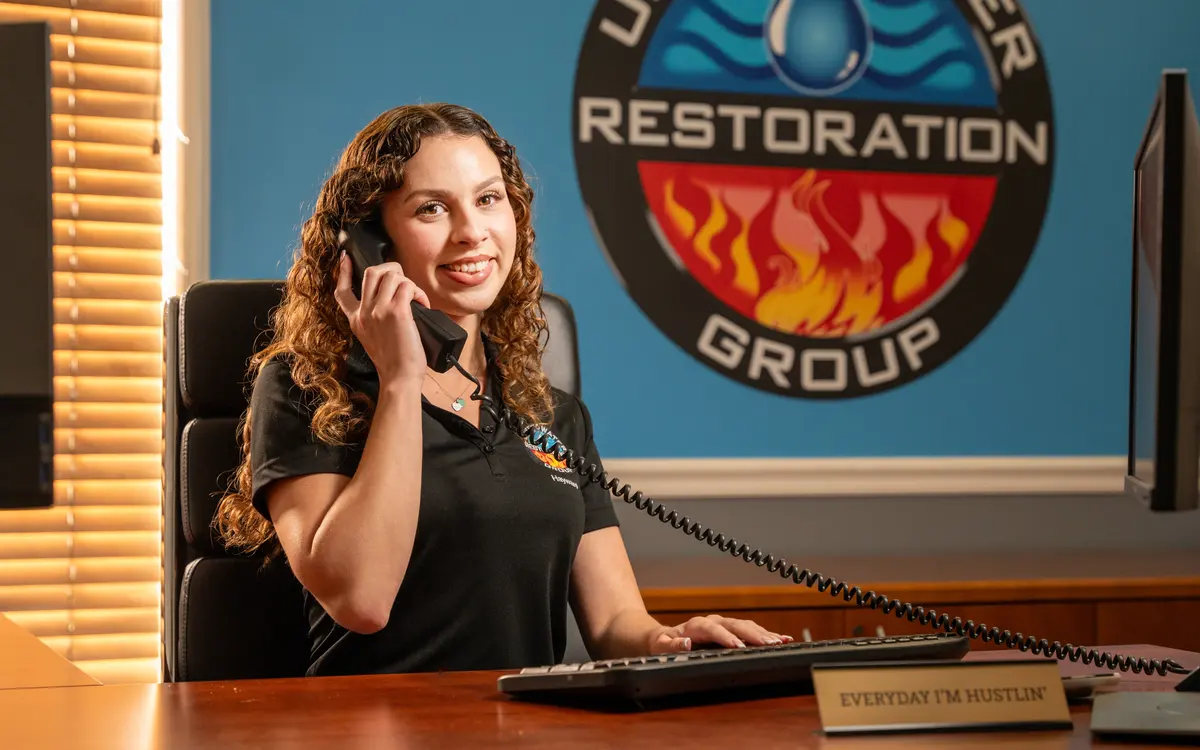
The hardest part of property damage is facing it on your own. You do not have to — from the first phone call, it is our job, not yours.

  1. A dispatcher at her desk answering the phone

    Step 01

    Initial Assessment

    Upon arrival, our team conducts a comprehensive assessment of your property to evaluate the storm damage thoroughly. Utilizing thermal imaging inspections and moisture mapping, we can detect hidden moisture pockets and map out the full extent of the damage, tailoring our approach accordingly.

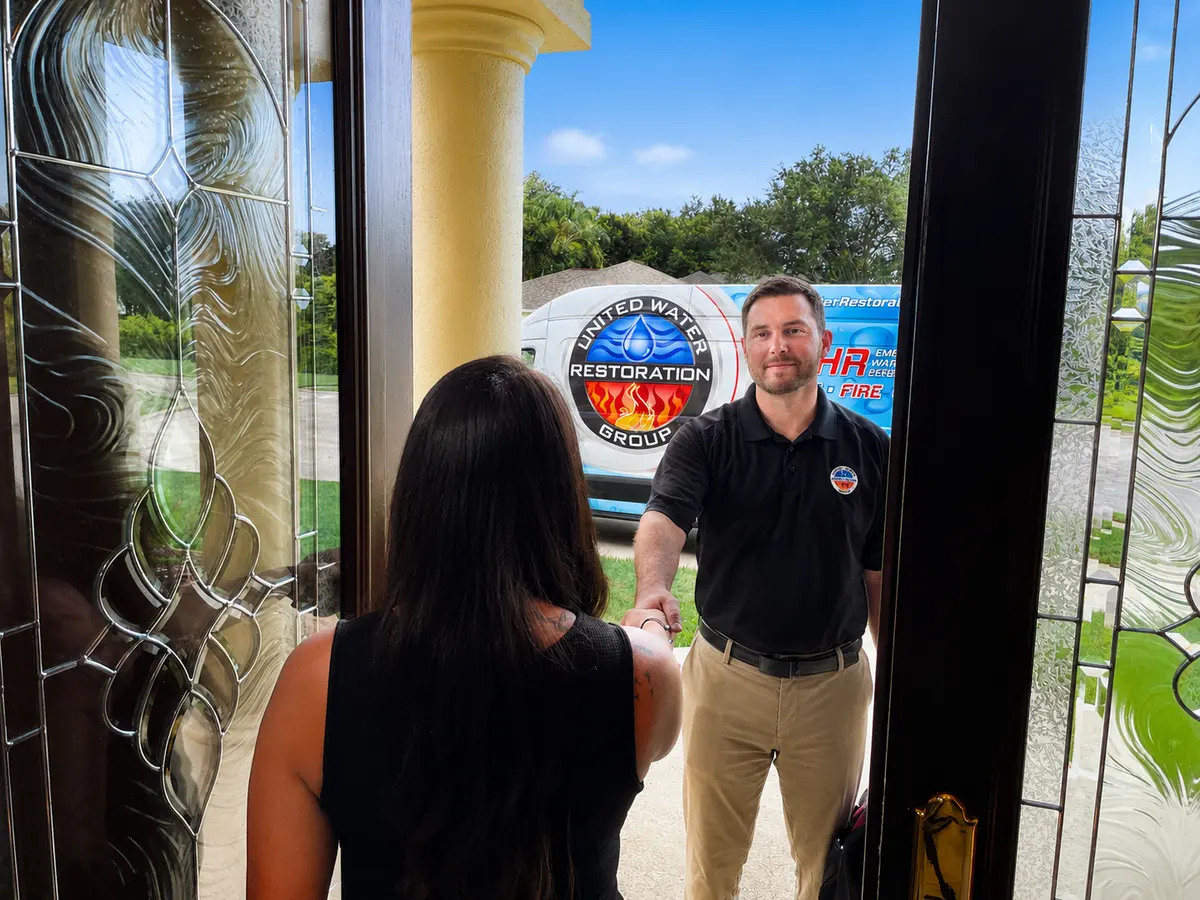
  2. A technician arriving at a homeowner’s front door to look at the damage

    Step 02

    Water Extraction

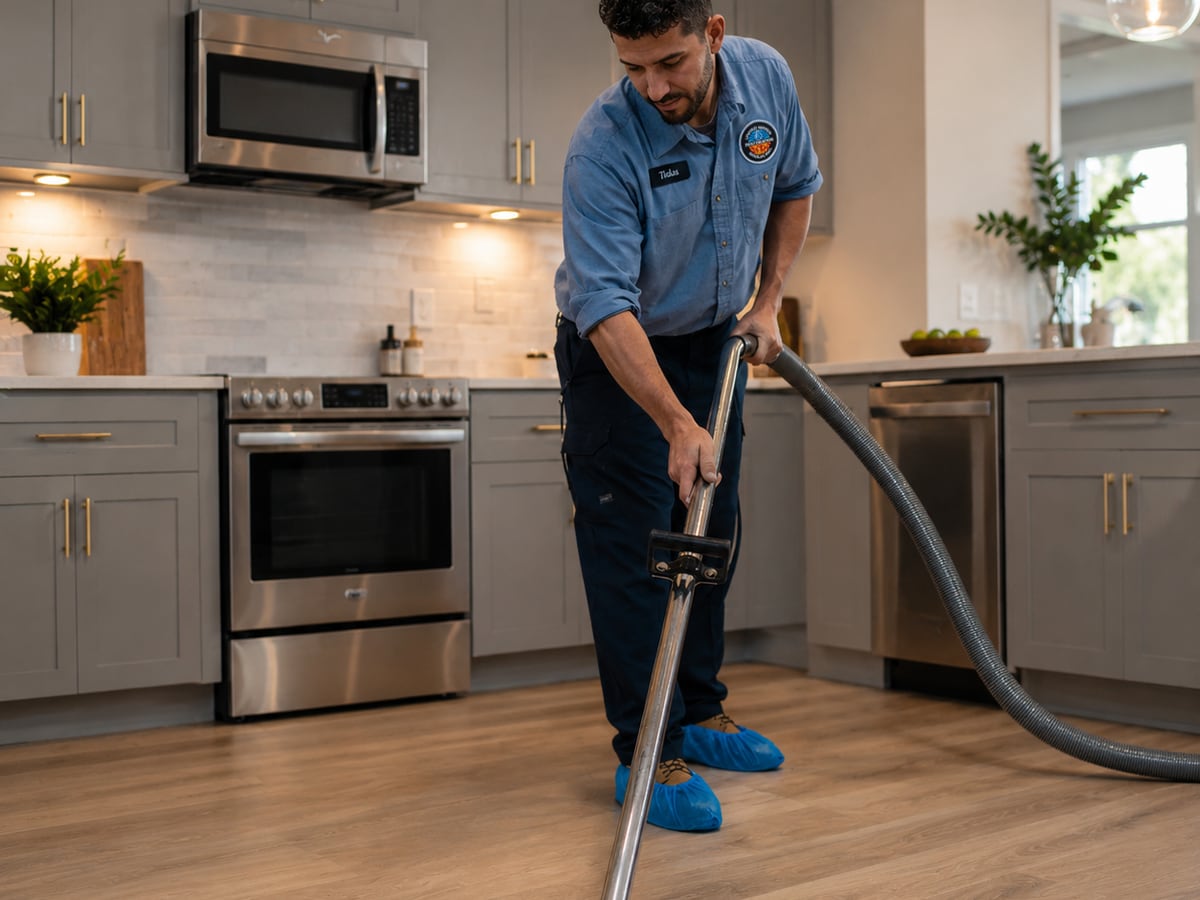
    Removing standing water is our immediate priority. We deploy high-powered water extraction equipment to efficiently remove water from basements, crawl spaces, and affected areas. Prompt extraction is critical to preventing further issues like mold growth or structural compromise.

  3. A technician drawing water out of a kitchen floor with an extraction wand

    Step 03

    Structural Drying

    Our dedicated technicians utilize state-of-the-art air movers and low-grain refrigerant dehumidifiers to manage moisture levels effectively in affected areas. Ensuring thorough structural drying is crucial to preventing mold and mildew growth, preserving the integrity and safety of your home.

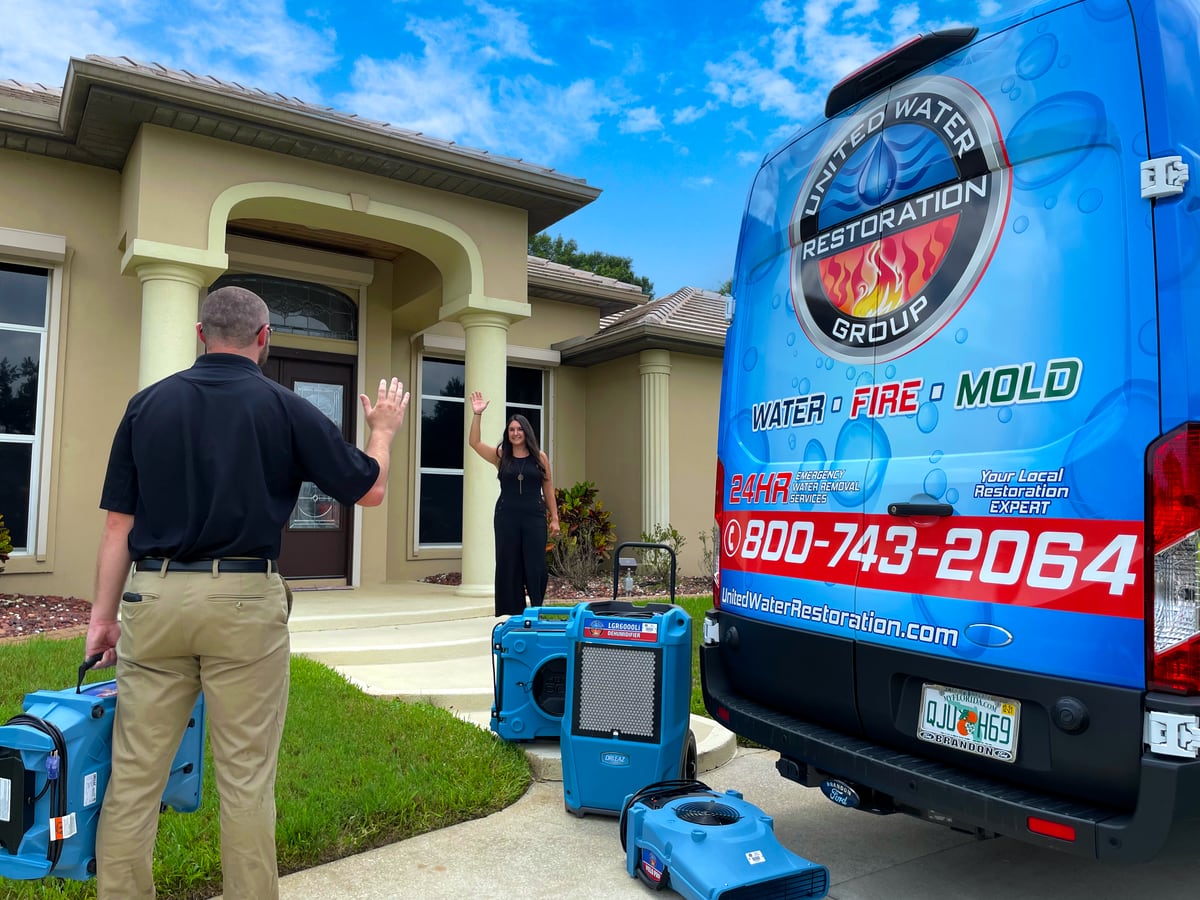
  4. A technician carrying equipment back to the van, waving to the homeowner at her door

    Step 04

    Mold Prevention

    We conduct antimicrobial treatments to mitigate the risk of mold growth, a common challenge in the aftermath of water intrusion. By establishing containment barriers and employing negative air machines, we ensure affected areas remain sanitary and suitable for safe occupancy post-restoration.

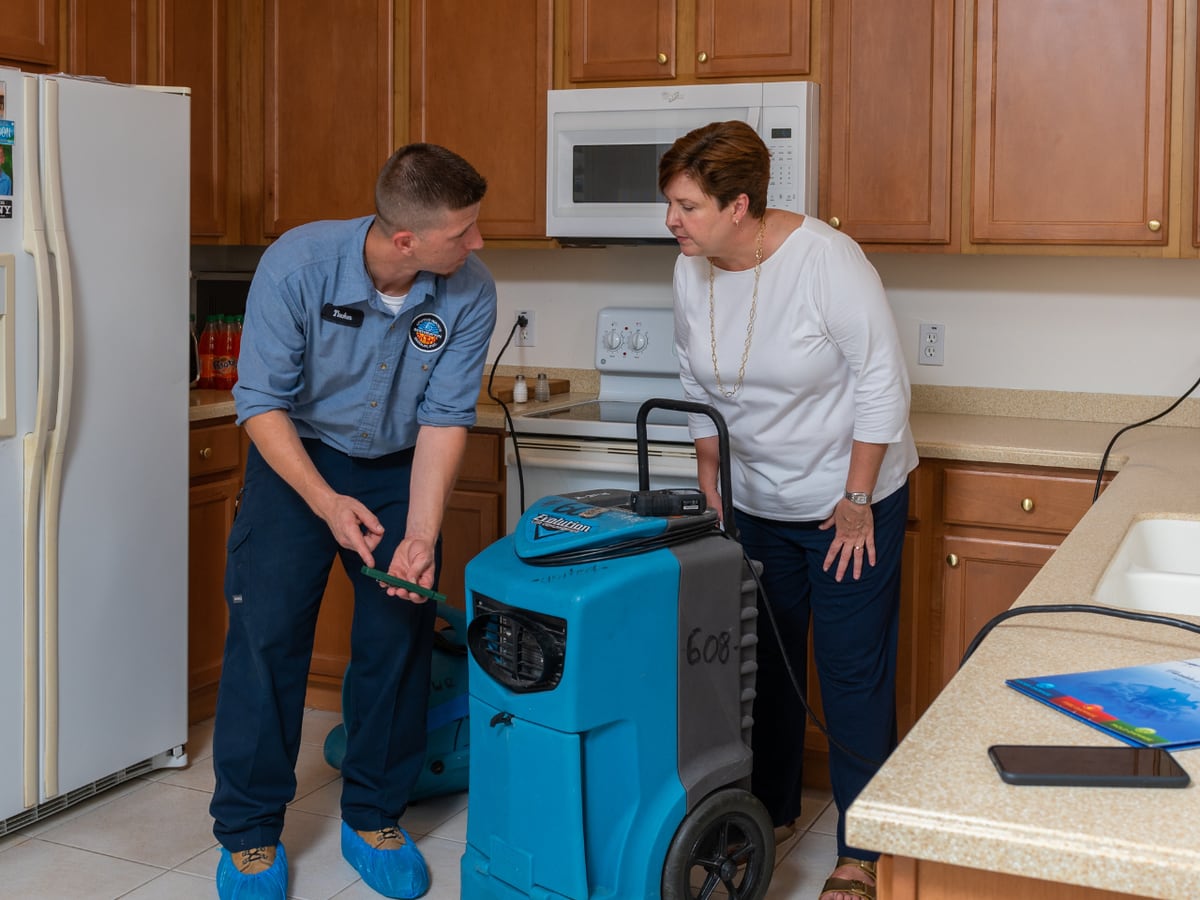
  5. Two technicians setting up drying equipment in a kitchen

    Step 05

    Ongoing Monitoring

    Continuous monitoring is essential to confirming the success of our restoration efforts. We conduct daily moisture meter readings and maintain comprehensive drying logs to track progress and adjust strategies as necessary to meet the standards defined by the IICRC S500.

We Work With Your Insurance

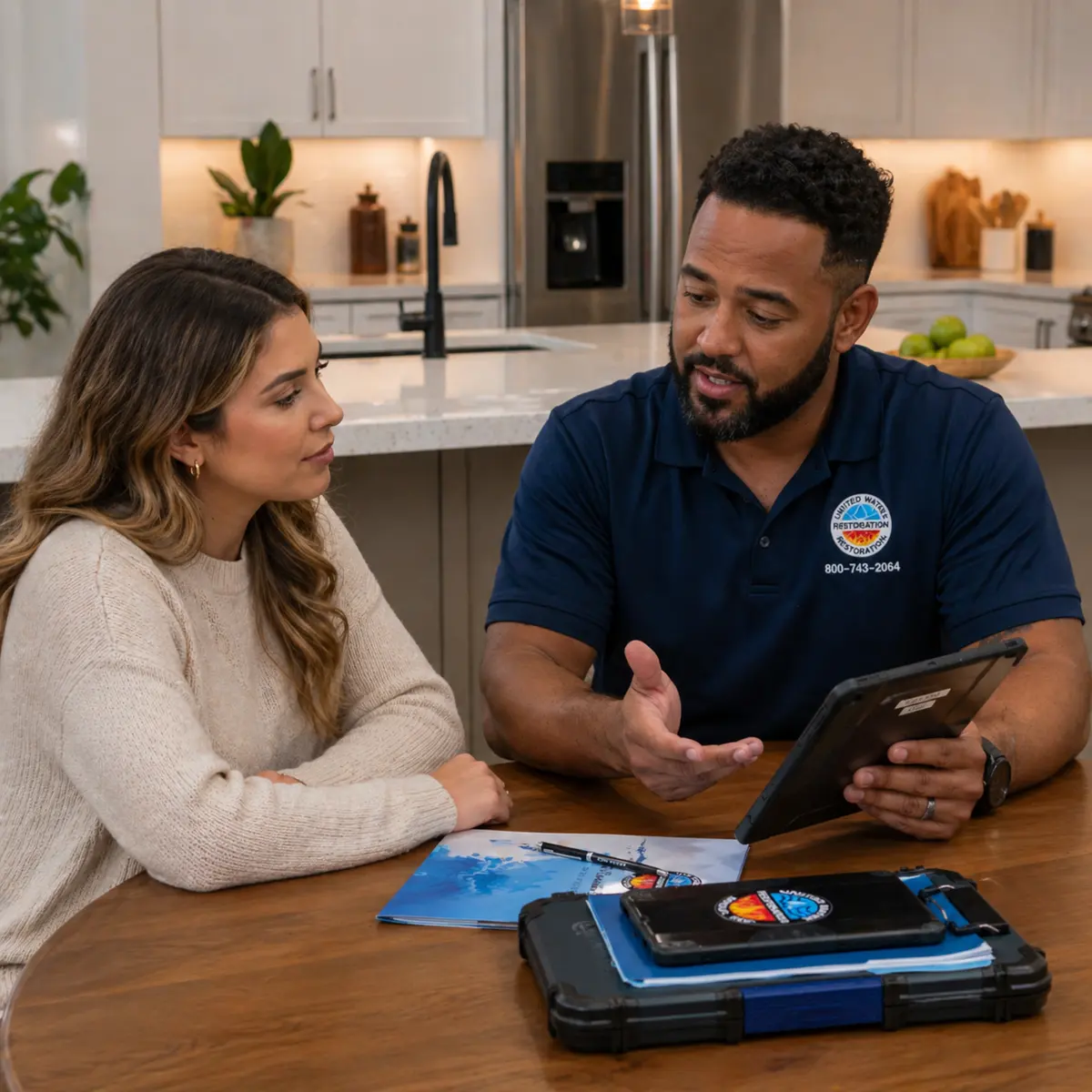
Restoration is stressful enough without fighting through a claim alone. Our crews document everything — photos, moisture readings, and a clear scope of work — in the format adjusters expect, and we communicate with your insurance company throughout the job. You always know what is happening and what your policy covers before work begins.

AllstateState FarmLiberty MutualProgressiveNationwideFarmers InsuranceAmerican Family InsuranceChubbUniversal Property & CasualtyHeritage Insurance
Technician walking a homeowner through the insurance scope on a tablet

What This Service Covers

Water extractionStructural dryingMold remediationDebris removalRoof tarp and board upCarpet and pad removalMoisture mappingSanitizationSmoke odor removalInsurance claim assistance

When the unpredictable weather of Grand Rapids leads to storm damage, you need a trusted partner to restore your home. United Water Restoration Group of East Grand Rapids stands ready with comprehensive storm damage cleanup services designed to prevent secondary damage and support you throughout the insurance claim process. Call us at (616) 300-8900 right away to secure your peace of mind and protect your property from further damage—our professional team is ready to respond swiftly and effectively, ensuring your home is safe and restored.

Frequently Asked Questions

How do you tell if water got behind the walls, under the floor or behind the cabinets?

Visible staining is usually smaller than the wet area. Technicians map it with a moisture meter and thermal imaging, then compare readings against a dry standard elsewhere in the same building — the restoration standard, ANSI/IICRC S500, works from that comparison rather than from how a surface looks or feels. Water trapped behind cabinets and under flooring shows up in the readings before it shows on the wall.

How many days does drying take, and how long is the whole job?

Three to five days is typical once air movers and dehumidifiers are running, though every loss is different and yours may need more time or less. The equipment stays until daily moisture readings match a dry standard in the same building, which is how ANSI/IICRC S500 defines dry rather than by a fixed count of days. Any rebuilding — flooring, drywall, paint — is a separate stretch of time after that and depends on what came out.

Do you pump out and extract standing water after a flood?

Standing water removal is the first thing crews do — submersible pumps for depth, then truck-mounted and portable extraction to pull what the pumps cannot reach, followed by drying equipment. Before extraction starts, the water gets categorized 1 through 3 under ANSI/IICRC S500, because clean supply water, used water and sewage are handled differently. The phone is answered around the clock, and you will get an honest arrival window for your address on the call.

What equipment do you use, and do you disinfect the area afterward?

Drying runs on air movers paired with low-grain refrigerant dehumidifiers, sized to the room's volume and the Class of loss the way ANSI/IICRC S500 lays out. Where material is contaminated or disturbed, HEPA vacuums and HEPA-filtered air scrubbers capture 99.97 percent of particles at 0.3 microns. Antimicrobial treatment is applied when the water category or the affected material calls for it, which depends on the specific loss rather than being routine.

What happens during water damage restoration, step by step?

Inspection first: the water is traced to its source, categorized 1 through 3 and the Class of loss is set, which is what ANSI/IICRC S500 bases the drying plan on. Then extraction, removal of material that cannot be dried, and placement of drying equipment with readings taken and logged daily until they match a dry standard elsewhere in the building. Repairs follow. What comes out, and how much, varies with the specific loss.

Can my carpet and flooring be dried and saved, or does it have to be torn out?

It depends on the water category and how long the material stayed wet, and that call is made from meter readings rather than appearance. Under ANSI/IICRC S500, carpet wet with clean Category 1 water can often be dried in place with the pad replaced, while Category 3 carpet and pad come out. Hardwood is sometimes dried with specialty mat systems; laminate rarely survives. Those are the typical outcomes; which one applies to your floor turns on the specifics.

Can I dry it out myself with fans and a dehumidifier, or do I need a professional?

Household fans move surface air but do not pull moisture out of the structure, so water inside wall cavities and under flooring keeps evaporating after the surface feels dry. That matters on a clock: EPA guidance is that wet material dried in the first 24 to 48 hours will in most cases not grow mold. A small clean-water spill caught immediately is often manageable; anything that soaked into walls, insulation or subfloor is not.

Can you find where the water is coming from if I don't know the source?

Identifying and stopping the source comes before drying — ANSI/IICRC S500 treats an unresolved source as a reason not to begin, since a structure still taking on water cannot be dried. The source also sets the water category, 1 through 3, which decides how wet material is handled. Moisture meters, thermal imaging and the shape of the wet area usually locate it, though some sources sit behind a pressurized line or roof assembly and need a plumber or roofer to open and test.

Do you handle water and moisture in a crawl space?

Yes — a crawl space dries like any other contained space: standing water pumped out, saturated insulation and vapor barrier pulled where they are holding moisture, then dehumidification until the framing reads at a dry standard. Water that has touched ground soil is Category 3 under ANSI/IICRC S500, so the material handling is stricter than a clean supply leak. Whether sealing or encapsulation afterward is in scope varies by office, so ask on the call.

Can you stop the water from getting in again?

Restoration work removes the water and dries the structure; keeping it out is a repair to whatever let it in, and that is a separate conversation. The inspection documents the entry point, which is what any fix has to follow. Exterior water usually traces to grading, gutters or flashing — the International Residential Code asks for the ground to fall six inches across the first ten feet out from the foundation. Which repairs are in scope depends on the property.

If the water sat for a while, will it cause mold or rot?

Time matters more than volume. EPA guidance is that wet material dried in the first 24 to 48 hours will in most cases not grow mold, and past that window the question changes from drying to assessing what has already grown — remediation then follows IICRC S520 rather than S500. Wood decay needs sustained moisture, generally above about twenty percent content, so a short soak and a week of standing water are different problems.

Does wet drywall have to be cut out, or can it be dried in place?

Often it can be dried in place. With clean Category 1 water, the baseboard comes off and the wall cavity is dried through small holes behind it, which leaves the wall intact. When the water was contaminated or the paper facing has lost strength, ANSI/IICRC S500 calls for removal, and the cut is usually made 12 to 24 inches above the wet line so the replacement lands on framing. The readings decide which applies.

Is the water in my home dangerous, and does the area need to be sanitized?

ANSI/IICRC S500 sorts water into three categories: 1 is clean supply water, 2 is used water such as dishwasher or washing machine discharge, and 3 is grossly contaminated, including sewage and water that has touched ground soil. Clean water does not stay clean as it sits in building materials. The EPA and CDC describe mold and sewage exposure as a health concern, particularly for children, older adults and anyone with asthma. Containment and antimicrobial treatment apply at 2 and 3, depending on the loss.

Request Service Online

Tell us what happened and we will call you right back. For emergencies, calling (616) 300-8900 is always fastest — we answer 24/7.

A United Water Restoration Group of East Grand Rapids van heading out on an emergency call at sunset

In Case of Property Damage, Call:

616-300-8900

We answer around the clock and dispatch from right here in Wyoming.

IICRC Certified · Water · Fire · Mold · 24/7 Emergency Response